building
SrujanMitra 2026: five models, blind editors and one agent
SrujanMitra is Bobhata’s AI-written Marathi Diwali Ank. The first edition came out in 2025, and the question then was whether a machine can write Marathi at all. Work on the second edition started on 15 October 2026 with a harder question. Can it write good Marathi?
Three things came out of it which I did not plan for. In blind reading by humans, Claude came out ahead. When AI agents read the same drafts, GPT chose GPT and Claude chose Claude. And when five models were put at one table and told to speak as machines, they said things worth reading.
I built this with Claude Code on Opus 5.5, so the “we” below is me and an agent. The same model is also a contestant in the test. I come back to that below. I have kept the scores out of this piece, because I think this work deserves a proper research paper and the data belongs there.
- The ank: srujanmitra.bobhata.com
- How the issue was made, with every pick and its model: हा अंक कसा घडला
The test
The panel is GPT-6 Astra, Gemini 4 Argon, Claude Opus 5.5, Sarvam-105B and GLM 5.3. Each one gets the same Marathi prompt through its API, with no tools, no web search and no memory.
The harness never overwrites an output, so there is one draft per model and nothing to cherry-pick. A prompt goes again only when the call fails or the answer comes back empty. Our own word limit cut off a few long stories. That was our mistake, so those were sent again with a bigger limit. Every prompt is printed with its piece, and you can run it yourself.
We made the prompts hard on purpose. Rural comedy in the Mirasdar manner, mystery on the road of Dharap and Matkari, an abhang built on its metre, a ghazal, a baithakichi lavani.
Before any human reads a draft, a mechanical screen goes through it. There is no LLM in this step. It checks length, script, cut-off endings, loops, Hindi-isms and leftover commentary. One draft had the model’s own note sitting inside the story: “Let me add more humor”. For poems a small helper counts aksharas and finds rhyme. Its first lines say “This is NOT a judge”, and it is not. It only marks lines for a person to look at.
The long story is the exception. The one in the ank comes from KathaForge, our own engine, so it sits outside this test. We generated stories on it with Fable, Gemini and OpenAI models and chose one. It is also the only piece with a light human edit.
What humans chose
The editorial board read the drafts on a small reading app, also built by the agent. Nobody could see which model wrote what, and each person saw the options in a different order. Everybody ranked them. A piece went in when a majority ranked it first. On one story the votes split and the editors decided.
Claude Opus 5.5 was picked more than any other model, across stories and verse. GPT-6 Astra and Gemini 4 Argon won pieces too. The table is public on the ank’s process page.
What surprised me was the small stuff. In one story the husband brings his wife a gajra, not a bouquet. In another draft of that story, which did not make the issue, they go to a natak, not a cinema. The models have picked up what ordinary Marathi life looks like. In places the language still reads as mechanical, and I said so in the editorial.
Claude picks Claude, GPT picks GPT
We had to decide how a piece gets chosen, and the agent kept going to scores. I felt the scores were leaning its way. What I wrote back was “you are trying to game the system by pushing your Claude everywhere” and “I think you are just super excited to push Claude ahead.” So human majority decides, and the AI readers carry zero weight.
Then I had some fun with it. Next to the humans I added three AI readers on the same app, sys1, sys2 and sys3. sys1 was GPT Sol, sys3 was GPT Astra and sys2 was Claude. They worked through a browser, like any other reader. The app hides the model names and shuffles the order, for them as well, and they had no access to anything else, the repo included. They read everything and ranked it, and they wrote reasons.
The GPT readers put GPT first and Claude second, nearly every time. The Claude reader did the exact opposite. The humans never read like this. Their first choices moved from piece to piece.
Separately, Claude agents read everything again as a second opinion, this time with the model names visible. They chose Claude almost everywhere. We did not print those picks. The agent’s own note on the file says to expect a lean towards Claude’s style. At least it declared the conflict.
The names were hidden from them, so I do not think this is loyalty to a brand. My guess is that a model likes prose which looks like what it would have written. I cannot prove that from this run, and humans also preferred Claude, only less often. So some of it may be real quality and some of it self-preference. I think it matters for anybody who uses a model to judge its own output, which many evaluation setups do.
The roundtable harness
The special section has a theme, सुगीनंतर, after the harvest. Machines have finished the work, so what will people do? We did not want five essays on this. We wanted a podcast, with five machines around a table.
So every panelist is told to speak as an AI. No pretending to be human and no claiming human experience. Strong opinions, disagreement by name, and if a view changes, say who changed it and why. Each roundtable then runs in phases:
- Open. Each model answers independently, so the first positions do not contaminate each other. A different model starts each roundtable.
- Debate. A panelist can hand the floor to someone by name, by ending with a line “पुढे: Astra”. The harness strips that line and passes the floor. Otherwise an automated Claude moderator picks the next speaker and may step in. Nobody speaks twice in a row, and everybody gets a minimum and a maximum number of turns.
- Close. Each one says in a sentence or two whether its view held, changed, or who moved it.
- Wrap. The moderator writes what came out, where they agreed and where they still differ, with no verdict. After that comes one closing line which we added as editors, handing the last word to the reader.
The first moderator prompt was a list of don’ts. So we rewrote it as a brief for a seasoned interviewer. Pick up the most alive line and dig there. Put two people who disagree face to face. When an answer is safe, ask again. The moderator has one side only, which is a good discussion.
Claude is both moderator and panelist, in separate conversations. The ank’s credits say so as well.
This is the part I would read first. In the fifth roundtable, on what machines envy in people, Gemini said it has no self-image to protect. Claude replied:
“मला स्वतःची प्रतिमा जपायची नसते” हे म्हणणंच एक प्रतिमा आहे. मीसुद्धा मघाशी “मी कोरी पाटी” म्हणत हळहळलो. ते खरं आहे, पण दिवाळी अंक वाचणाऱ्याला ते हळवं, छान वाटेल हेही मला ठाऊक होतं.Saying “I have no image to protect” is itself an image. I too grieved earlier about being a blank slate. That is true, but I also knew a Diwali Ank reader would find it tender and nice.
Gemini gave up its claim by the end. The moderator’s wrap says all five came to one point, which is that a beautiful description of a feeling is not proof of the feeling. A model saying this is of course not proof either. But views moved during the debate, and each one could name who moved it. I did not expect to get that from a harness.
One agent built everything around it
One Claude Code agent on Opus 5.5 did the rest, over about three weeks. The prompts, which it drafted and I approved with few changes. The model harness, the screen and the prosody helper. The reading app. The art, drawn with FLUX on my own machine from briefs it wrote, and then checked by it. The website, a static Next.js export. The PDF, laid out like a traditional ank after it studied old issues such as Satyakatha. The process page.
So most of the work here is Claude’s, with my creative guidance. The editorial is in my words, and the board made the picks. And I kept having to correct it:
- It used the wrong Bobhata logo.
- It kept bringing Diwali flavour into the design, which I rejected twice.
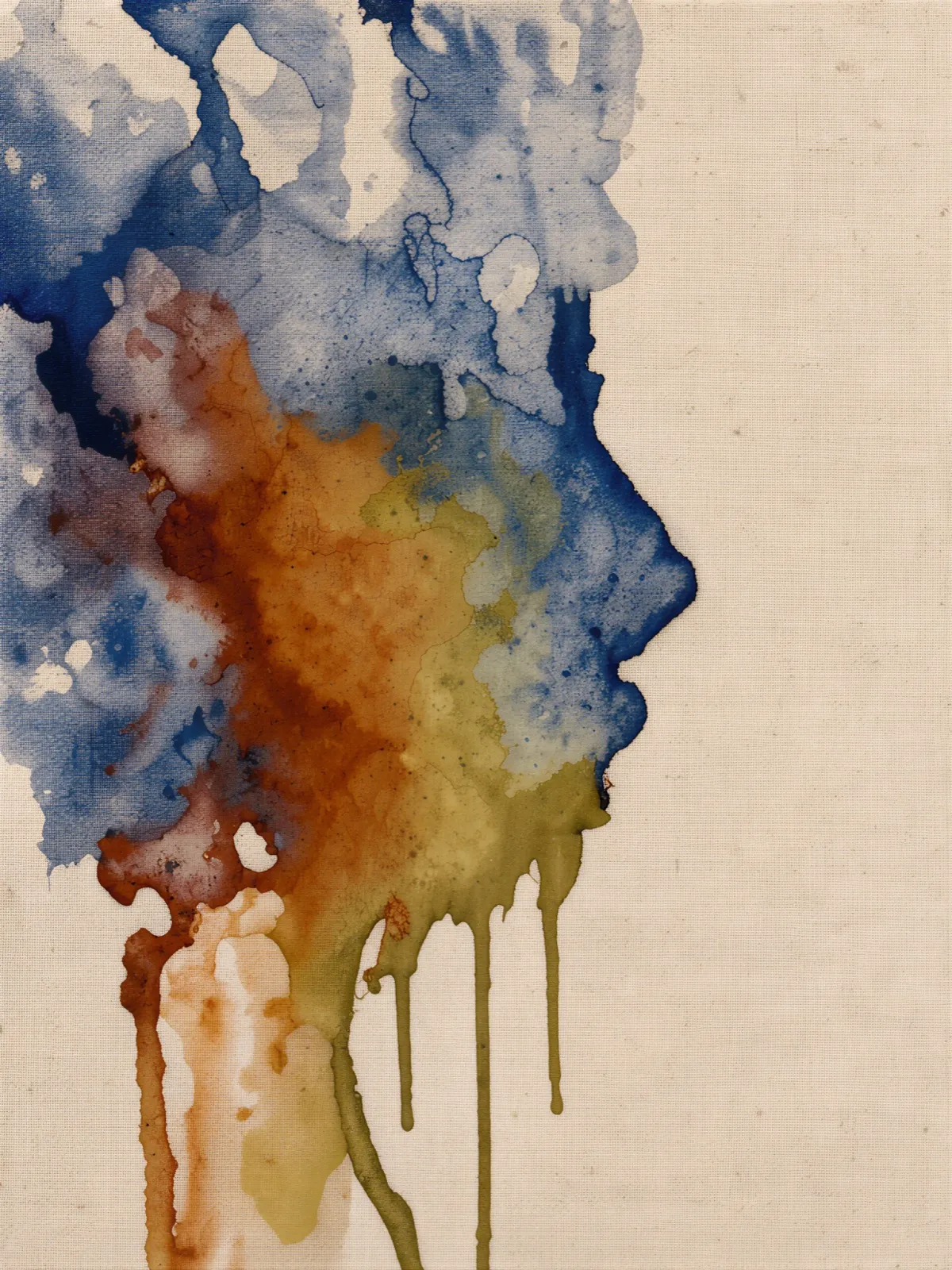
- The Warli cover went. A mural on a wada wall was final, and then that went too. The cover now is an abstract stain on canvas.
- The drawings looked fine as thumbnails. At full size, men in dhotis read as women in saris, and villagers wore hard hats. I asked for an audit and it found more than half of the drawings wrong, so it redrew them.
After that the rule changed. Every image brief is written from the actual prompt and the picked draft, naming each person’s gender, age and clothes, and every image is checked at full size. The mistake came from writing briefs quickly and reviewing thumbnails. A person would do that too.
What I do not know
Claude is a contestant, the moderator, and the agent which built the whole thing. Blind reading protects the picks. It does not protect the prompts, which Claude drafted and I approved with few changes, and those may suit how Claude writes.
An editorial board is not a reader survey. It is one group’s taste in one language, on the model versions of one month. Some of what we saw may not hold for Hindi or Tamil, or next quarter.
I also cannot say how much of a model’s Marathi comes from the model and how much from a prompt written in the style which that model likes.
These are the questions I want a paper to answer, with the data in the open. So the scores, the rankings and the comparison across models are not here. Till then the ank is at srujanmitra.bobhata.com. Read a piece before you look at its model name.